
Chiropractor for Sciatica in Perth
Sciatica is serious.
It's an electric pain that courses from your buttock down the back of your leg, shoots down the outside of your calf, and runs under your foot into your toes. Or it's numbness. That dead-leg feeling, like you've been sitting on your foot too long.
Sitting through a meeting becomes torture. At night, you can't find a position that doesn't hurt. Even the thought of a sneeze, a cough or sitting down on the toilet fills you with fear.
When pain reaches this far down your body, there's nowhere left for it to go. This is one of the most serious back problems there is. At Vitality Chiropractic in Yokine, we take it seriously: a detailed consultation, a careful examination and X-rays if required, so we know exactly what we're dealing with.
- Since 2005
- HICAPS on the spot
- X-rays bulk billed with Medicare
- Private client parking
New client online special
Chiropractic or massage, $85 for your first visit when you book online. Plus our first chiropractic visit guarantee.
New client online special
$85first visit
Chiropractic or massage
Before HICAPS rebate
Our First Chiro Visit Guarantee
Not happy with your first chiropractic visit? You don't pay.
We guarantee a thorough chiropractic investigation into your sciatica, a clear explanation, and a team that genuinely wants to help. If you're not happy, you don't pay. No questions asked, no follow-up calls, no obligation.
How the guarantee worksWhat is sciatica?
Sciatica is pain, tingling or numbness that travels along the sciatic nerve, from the lower back or buttock down the leg.
The sciatic nerve is the longest nerve in the body. It starts at the base of your spine and travels all the way down into your toes. When it's irritated, the pain can follow it the whole way. People describe:
- Electric, shooting or burning pain from the buttock down the back of the leg
- Pain down the outside of the calf and under the foot into the toes
- Numbness, pins and needles, or a dead-leg feeling
- A heavy or weak leg, or a foot that doesn't feel quite right
- Pain that's worse when sitting, coughing, sneezing or bending
- Lower back pain, although often the leg hurts more than the back
Why it happens
Sciatica rarely comes out of nowhere. Usually, the signs have been there for years.
It often starts with what I call a history moment. A fall off a motorbike or a sporting injury 20 years ago. The trailer that was just a bit too heavy. The time you lifted, twisted and sneezed all at once.
After that, the back pain comes back now and then. Each year it comes a little more often and lasts a little longer, as the weakness slowly builds. Until one day, simply picking up an envelope or getting out of bed sets it off, and this time it goes down the leg.
Underneath, something is pressing on or irritating the nerve where it leaves the spine. Common causes include:
- A bulging, herniated or prolapsed disc
- Arthritis and bony changes narrowing the hole where the nerve leaves the spine
- Tight muscles deep in the buttock
- Long hours sitting, especially with poor support
- Lifting and twisting, particularly after a long week at a desk
The different names sciatica goes by
Sciatica is a description of where the pain goes, not a diagnosis. These are the common causes behind it, in plain words:
- Disc bulge, herniation or prolapse: the cushion between two vertebrae bulges or tears and presses on a nerve root. Often worse sitting and bending.
- Pinched nerve: the everyday term for a nerve root being squeezed or irritated in the lower back.
- Spinal stenosis and lateral recess narrowing: arthritis or bony spurs filling the space the nerve passes through, more common as we age. Often worse walking and better sitting or bending forward.
- Piriformis syndrome: a tight muscle deep in the buttock irritating the sciatic nerve.
- Sacroiliac joint pain: pain from the joint where the spine meets the pelvis, which can refer into the buttock and leg.
- Spondylolisthesis: one vertebra slipping forward on the one below, which can narrow the space for the nerves.
The real cost: you
Sciatica takes over your day. Every chair is a negotiation. You sit on a funny angle, shifting your weight to keep the pressure off.
The drive becomes a worry. Will you make it there? Your accelerator foot is in constant pain. Long trips, holidays and weekends away get cancelled. So does dinner with friends, because you can't sit through it.
And it wears you down. No sleep, constant pain, and the fear of the next sneeze. You're not you.
Add that up. You're not just putting your life on hold. You've stopped living as the person you really are. Don't wait for it to get worse. Get it looked at. Live alive. Live you.
A note from Geoff
Sciatica is serious, and I treat it that way. I see a lot of people with sciatica, and the ones who do well are the ones where we take the time to find out exactly what's going on.
Sciatica is a symptom, not a diagnosis. Is it a disc? Arthritis narrowing the space for the nerve? Something else? Each needs a different approach. That's why sciatica warrants a careful investigation, X-rays where clinically required, and a serious plan built for you.
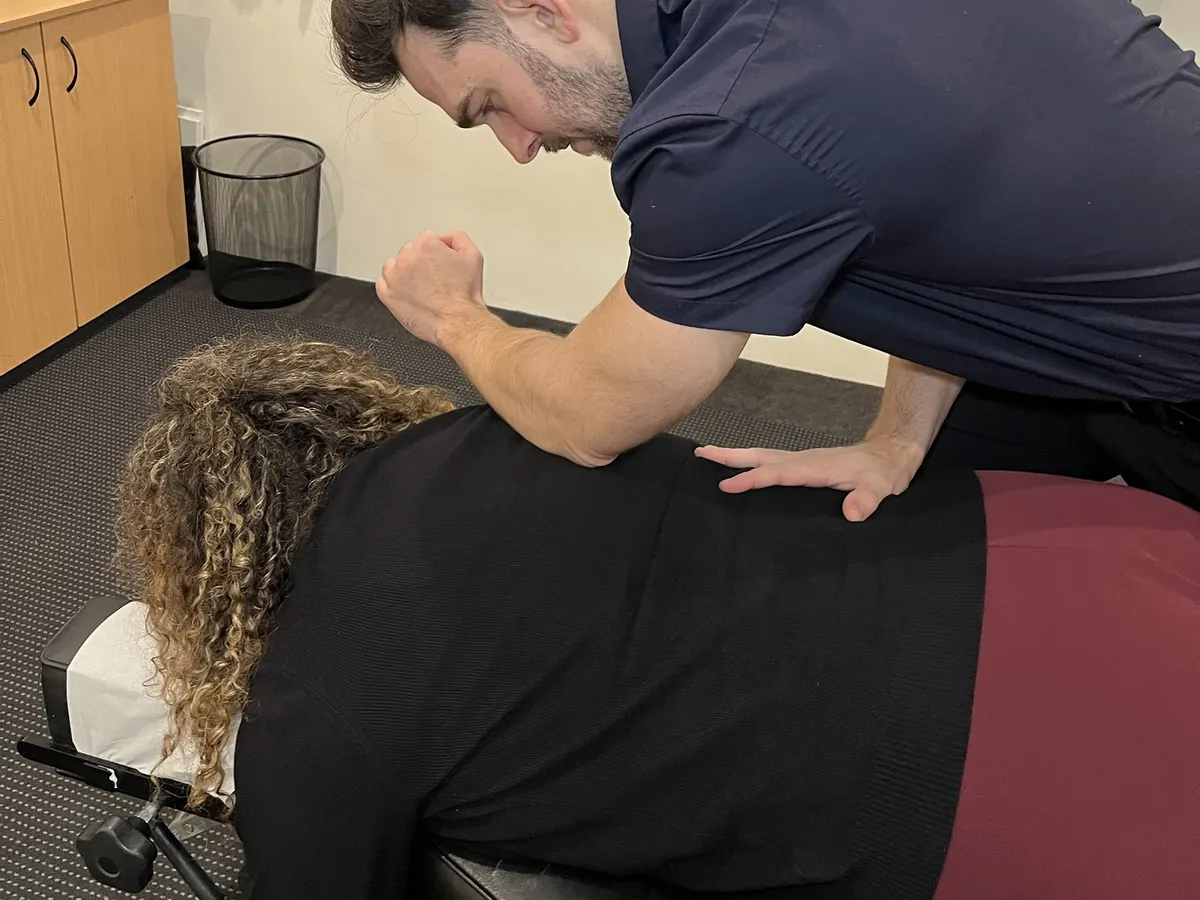
Then, if it's suitable, we adjust you gently in a way that suits an irritated nerve, and give you specific exercises to support your recovery. That's the Vitality Method.
Try this right now
Sit on a firm chair and slowly straighten one knee, lifting your foot until your leg is out straight. Then the other. Does one side bring on pain or tingling down the back of your leg?
If it does, that tells us the nerve is involved, and it's exactly where I'd want to start.
How we assess sciatica
Getting the assessment right is the most important step. We take a detailed history, then examine your lower back, hips and pelvis, and test the nerves into your legs: strength, reflexes, sensation and nerve tension tests.
We also screen carefully for warning signs that need urgent medical care. If you already have an MRI or X-ray, bring it. If imaging is clinically justified and you don't have any, we'll explain why before referring you.
What your plan will include
Here's exactly what happens when you come to Vitality with sciatica:
- A detailed consultation and clinical assessment
- Digital X-rays if clinically required, bulk billed with a valid Medicare card
- Specific adjustments to assess whether change is possible for you
- If change is possible, and it's what you want, a care plan built around you and your lifestyle
- Gentle nerve mobility and core exercises you can do at home
- Referral to your GP or a specialist if your symptoms need it
- Daily tips for sitting, lifting, sleeping and staying active
My promise to you
Many cases of sciatica settle over weeks to months, but every case is different, so I won't promise a timeframe.
What I do promise is a thorough investigation, an honest explanation of whether we can help, and quick referral if things aren't improving or new symptoms appear.
How to get started
Book online
Pick a time that suits you. New clients pay $85 for the first visit when booking online. No referral needed.
Bring what you have
Any scans, X-rays or reports, your health fund card, and a list of any medications. Wear comfortable clothes.
Your first visit
A detailed consultation, a thorough examination, and X-rays only if clinically required, bulk billed with a valid Medicare card.
Park and walk in
Six private client bays at our Swanston Street entrance, 32 Flinders St, Yokine. Plus verge and street parking on Swanston Street and Collins Street.
Meet your chiropractors
Every chiropractor at Vitality is trained in the Vitality Method, so you get the same thorough approach whoever you see.

Dr Geoff Cowie (Chiropractor)
Founder and Principal Chiropractor

Dr James Stout (Chiropractor)
Chiropractor

Dr Hamish McLeod (Chiropractor)
Chiropractor
Easing sciatica at work
- Break up sitting. Stand and walk for a minute every 20 to 30 minutes.
- Sit with your hips slightly higher than your knees and your back supported.
- Take your wallet or phone out of your back pocket before you sit.
- Try a standing desk for part of the day if you can.
- Keep gently active. Short walks are usually better than lying down all day.
When to see someone
Get urgent medical help, not a chiropractor, if you have:
See a GP or go to emergency first if you have:
- Numbness around the groin, buttocks or inner thighs (saddle area)
- New trouble controlling your bladder or bowels
- Weakness in both legs, or a leg or foot that is getting weaker
- Sciatica after a fall or accident
- Leg pain with fever, unexplained weight loss or a history of cancer
Book an assessment if:
- You have pain down one leg that hasn't settled after a few days
- It's worse when you sit at your desk or drive
- It's affecting your sleep or work
- You want a clear explanation of what's going on and what to do next
Frequently asked questions
Can a chiropractor help with sciatica?
Chiropractic care may help some people with sciatica, particularly where it's linked to mechanical problems in the lower back. We assess you thoroughly, screen for warning signs, and tell you honestly if you need your GP or a specialist instead.
What causes sciatica?
The most common cause is irritation of a nerve root in the lower back, often from a disc. Narrowing of the spaces around the nerves and tight buttock muscles can also be involved. Long periods sitting often make it worse.
What does sciatica feel like?
Usually a deep ache, burning or electric pain that starts in the lower back or buttock and runs down one leg, sometimes past the knee. It can bring pins and needles or numbness. It's often worse when you sit, bend, cough or sneeze.
How do I get fast relief from sciatica?
There's no instant fix, but a few things often help: keep moving gently with short walks, avoid sitting for long stretches, try ice for the first couple of days then heat, and sleep on your side with a pillow between your knees. If it isn't easing, or it keeps coming back, get it assessed.
How long does sciatica last?
It varies. Many flare-ups settle over a few weeks, but some hang around for months or keep coming back. Finding out what's irritating the nerve is the key to stopping the cycle.
What is the best sleeping position for sciatica?
Most people find lying on their side, with the painful leg on top and a pillow between the knees, easiest. On your back, try a pillow under your knees. Avoid sleeping on your stomach.
Why is sciatica worse when I sit?
Sitting increases pressure on the discs of the lower back and can put the nerve on stretch, which is why many people find sitting at a desk or driving especially painful.
Should I rest or stay active with sciatica?
Gentle activity within comfort is usually better than bed rest. We'll show you what's safe for you.
How many visits will I need?
Everyone is different, so we can't promise a set number of visits. We set goals with you at the start, review your progress regularly, and change the plan if it isn't helping.
Should I see a chiropractor or a physio for sciatica?
Both are registered health professionals who can assess and manage sciatica. Chiropractors focus on how the spine, joints and nervous system work together. Physiotherapists focus on rehabilitation and exercise. Many people see both. What matters most is a thorough assessment and a clear plan.
How can I fix sciatica at home?
There's a lot you can do yourself. Keep moving gently, take regular breaks from sitting, and try the self-test and tips on this page. If it isn't settling after a week or two, keeps coming back, or you have any of the warning signs on this page, get it assessed.
What happens after my first visit?
You'll leave with a clear explanation of what we found, and what you can do at home straight away. If chiropractic care is a good fit and it's what you want, we'll talk you through a care plan. There's no pressure.
Can I get an appointment today?
Check our online booking for the next available time, or call (08) 9201 0566. We're open Monday to Friday, 8am to 6pm, and we'll fit you in as soon as we can.
Is chiropractic safe for sciatica?
For most people, chiropractic care from a registered chiropractor after a proper assessment is low risk. We screen for warning signs first, explain any risks, and use gentle techniques where appropriate. You can say no to any part of your care.
Do I need X-rays or a referral?
No referral is needed. X-rays are only recommended when they're clinically justified, and we'll explain why first. When they are needed, they're bulk billed with a valid Medicare card.
When should I see a GP instead?
See a GP or go to emergency first if you have any of the warning signs listed on this page. If we find anything during your assessment that needs medical care, we'll refer you.
How much does it cost, and can I claim on my health fund?
New clients who book online pay $85 for their first visit. We have HICAPS for on-the-spot claims with eligible private health funds, and your rebate depends on your fund and level of cover. See our pricing page for more.
Find us in Yokine
Vitality Chiropractic, 32 Flinders St, Yokine WA 6060
Private client parking: 6 bays at our Swanston Street entrance. Open Monday to Friday, 8am to 6pm.
Phone (08) 9201 0566
Close to
Yokine, Dianella, Tuart Hill, Nollamara, Menora, Coolbinia, Joondanna, Morley, Osborne Park, Mount Hawthorn.
Book OnlineBook your first visit
$85 new client online special. No referral needed.
Related pages
Ready to book?
Book your appointment online or call us to speak with our friendly reception team.